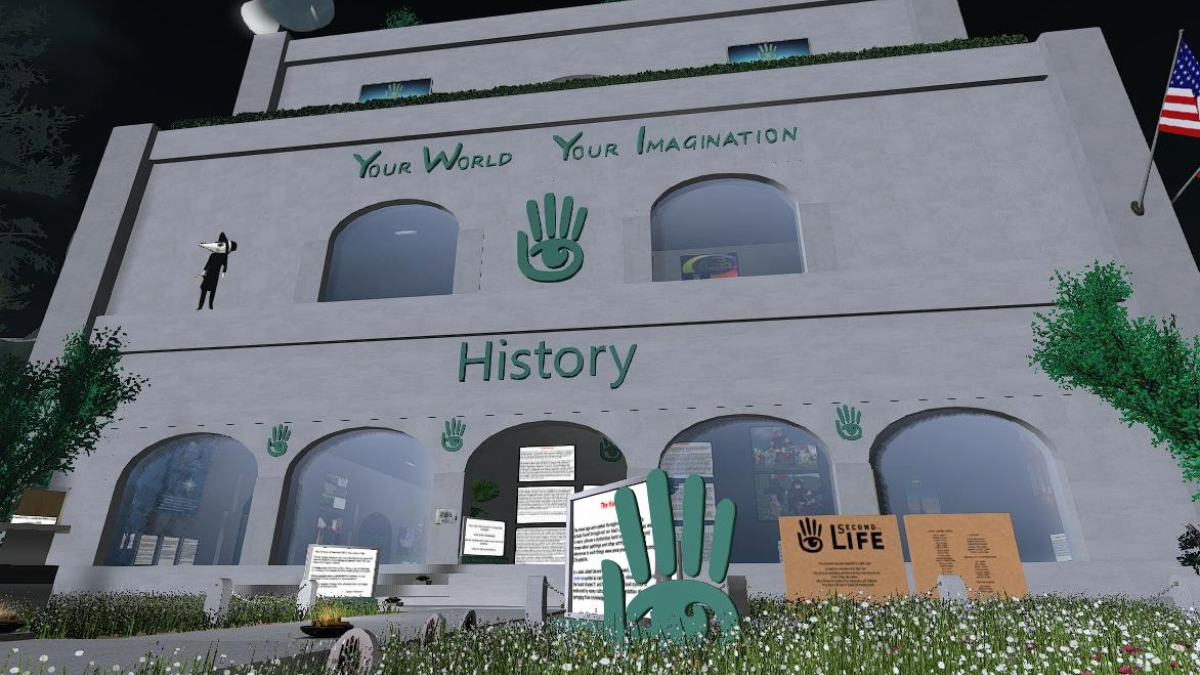
When you first step inside the Primitive Museum in Second Life, the air feels different, filled with the quiet energy of history woven through every carefully placed texture and prim. Located on the Immaculate Campus region, this museum isn’t simply a build; it’s a living archive of virtual evolution. Created by curator Sniper Siemens, the Primitive Museum chronicles the digital anthropology of Second Life from its inception in 1999 through its modern era.
A Time Capsule in Pixels
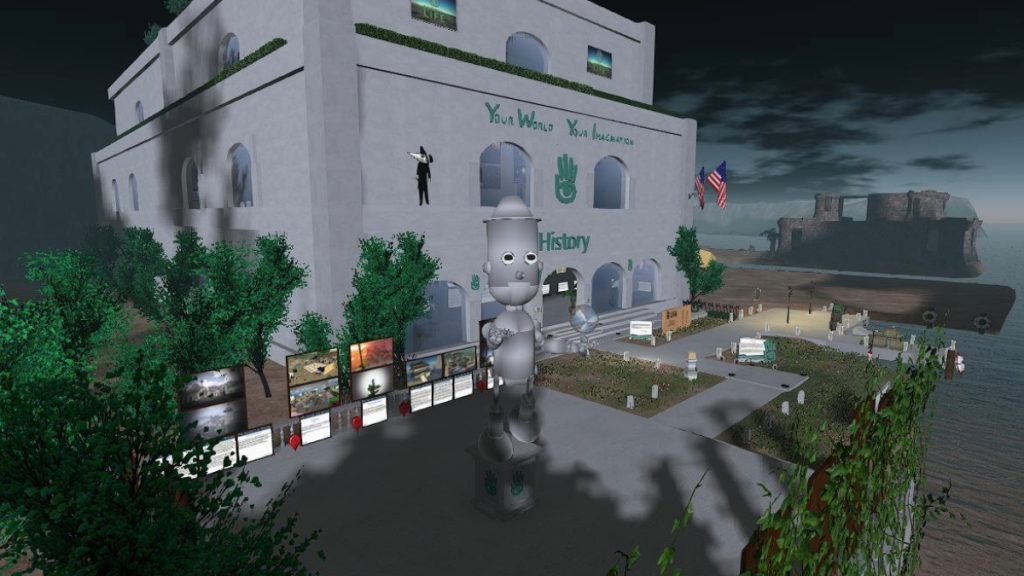
Walking through the main hall is like slipping through a portal to the grid’s earliest days. The exhibit boards and reconstructed scenes reveal a world far simpler and yet far more pioneering than the sculpted mesh and photorealistic regions we know today. Each display tells a story of discovery: the humble beginnings of Linden Lab in 1999, the first public release of Second Life in 2003, and the early community experiments that defined what a “virtual world” could become.
Primitive geometry, flat textures, and old-world interfaces stand proudly as artifacts of ingenuity. Long before the Marketplace, mesh, or windlight skies, residents used basic cubes, spheres, and cylinders, the “prims” that gave the museum its name, to build homes, clubs, and even art installations. It’s a reminder that creativity has always been Second Life’s most powerful tool.
Foundations of a Digital Civilization
The museum’s chronological layout highlights key developments: the birth of the in-world economy, the rise of user-created fashion and real-estate markets, and the introduction of teleportation and scripted objects that changed how residents connected. Panels and interactive boards trace these milestones, from the first Linden Dollar transactions to the establishment of iconic early regions like Boardman, Linden Town, and Nova Albion.
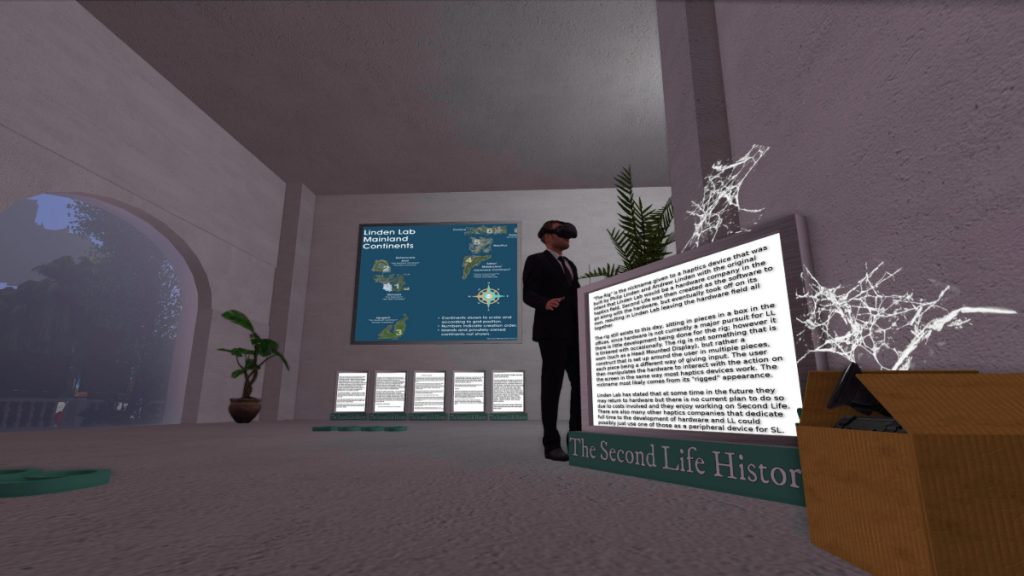
It’s easy to forget that Second Life once made global headlines for creating a functioning digital economy valued in the millions of U.S. dollars. The Primitive Museum grounds that history in vivid context, displaying archived screenshots, early promotional materials, and resident contributions that helped shape the culture we experience today.
The Curated Experience
The space itself is clean, deliberate, and reverent. Lighting is subdued, inviting quiet reflection. Each section feels carefully arranged to let the exhibits speak for themselves. Visitors can follow a linear path through time or wander freely among installations that highlight specific aspects of SL’s growth, from education and enterprise projects to the evolution of avatar design and performance art.

One particularly engaging display recreates the interface of the original Second Life viewer, complete with blocky text and gray-tone renderings. Standing before it, one can almost feel the wonder of those first log-ins, when every movement was new and every creation felt like discovery.
Inspiration in Retrospect
What makes the Primitive Museum exceptional is not only its attention to historical accuracy but also its emotional impact. Touring it feels like revisiting the origin of a shared dream, a world built by its residents, for its residents. As I moved from decade to decade, I was struck by how enduring the spirit of experimentation remains.

Second Life began as an audacious idea: that people could build, trade, and express identity in a persistent digital world. Two decades later, that experiment has matured into a vibrant culture of artistry, commerce, and connection. The Primitive Museum captures this arc beautifully, reminding us that even the most advanced mesh build owes its lineage to the first cube placed on a bare virtual hill.
Visitor Notes
The museum is open to all visitors and can be found in the Destination Guide under Education & History. A self-guided tour takes roughly 30–45 minutes, though enthusiasts may easily spend longer exploring the archival photography and machinima exhibits. It is best experienced in moderate graphics settings to appreciate the contrast between early and contemporary rendering styles.

Photography is encouraged, and visitors are invited to leave a short notecard reflecting on their own beginnings in Second Life, a fitting gesture that continues the legacy of shared creation.
Final Thoughts
The Primitive Museum stands as one of Second Life’s most meaningful cultural landmarks, not because it celebrates perfection, but because it honors imperfection as the foundation of innovation. For long-time residents, it is a poignant walk through memory; for newcomers, an essential introduction to the history behind the grid.
It reminds us that every build, every club, every art piece, even the world-spanning communities we enjoy today, began with a single prim and a spark of imagination.
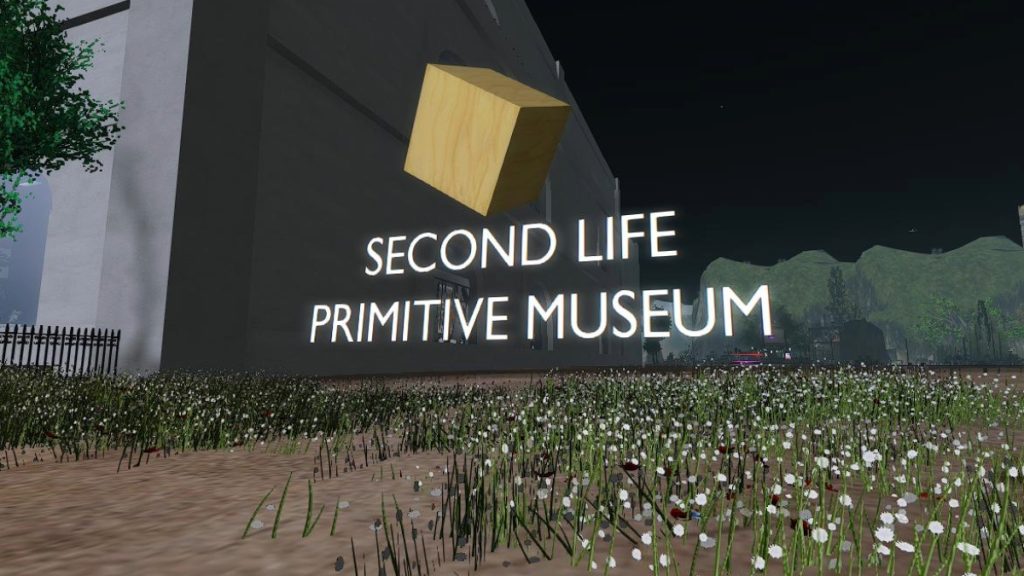
The Primitive Museum: preserving not just what was built, but why it was built.
Visit The Second Life Primitive MuseumToday!
http://maps.secondlife.com/secondlife/Immaculate/140/211/22