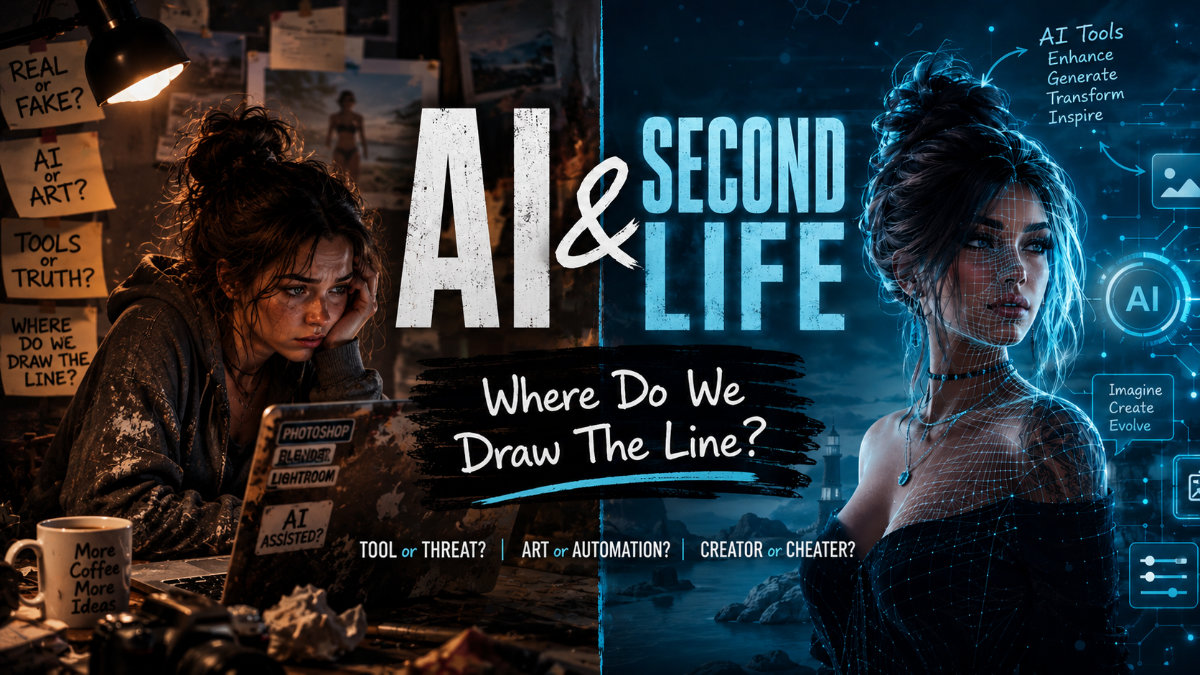
Artificial Intelligence, Photography, and Where We Draw the Line
I wasn’t planning on writing another article about AI.
Honestly, I think most of us are getting a little tired of hearing about it. Everywhere you look there’s another debate, another argument, another platform trying to figure out where the line should be. But over the past couple of weeks, I couldn’t help noticing something. Every conversation I had about Flickr, Primfeed, or the new platform SecondPix eventually came back to the same subject.
Artificial Intelligence.
Someone had an image moderated. Someone else was frustrated because they weren’t sure what was allowed anymore. Others were wondering if it was even worth posting their work if they had to second-guess every edit they made.
At some point I realized this isn’t really about AI anymore.
It’s about what we believe art is supposed to be.
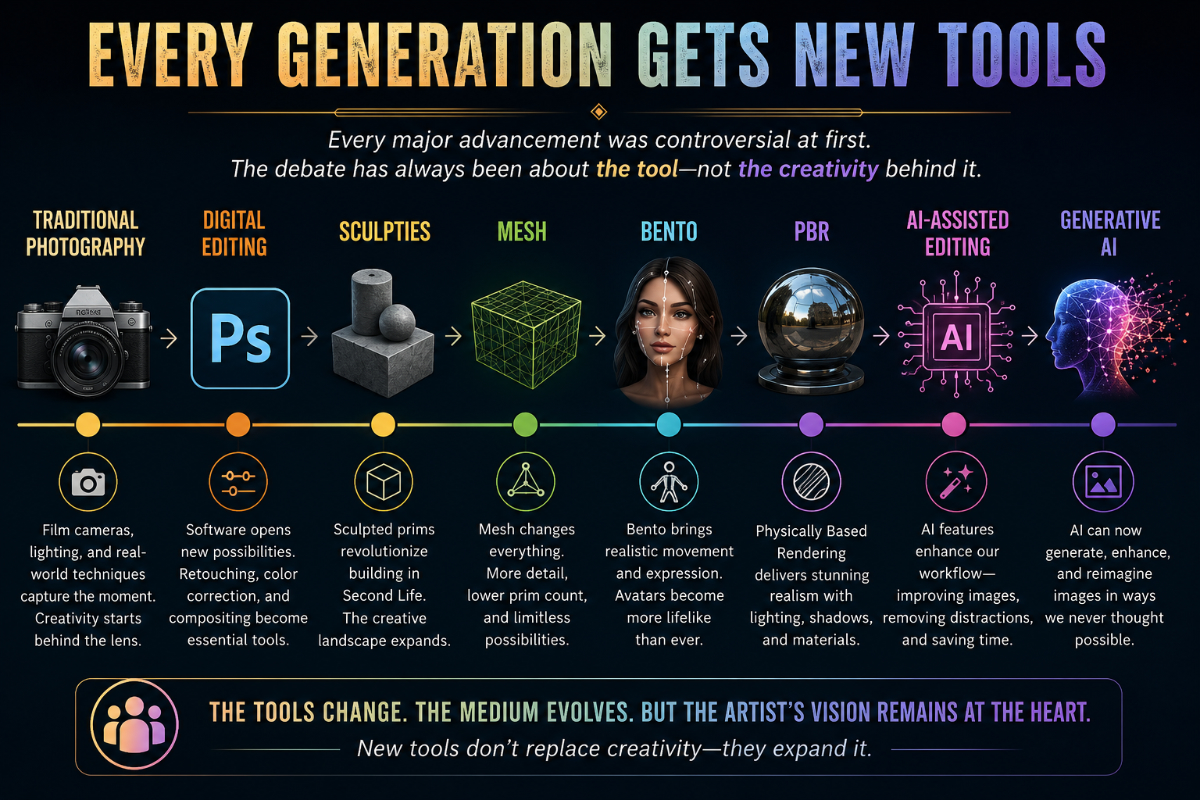
Every New Technology Faces Resistance
I’ve been around Second Life long enough to watch just about every major change people said would “ruin” the platform. Sculpties came along. Then mesh. Bento. PBR. Every one of those changes had people convinced Second Life was headed in the wrong direction.
Yet here we are.
AI feels like the next chapter in that same story.
The difference this time is that it isn’t just changing how we build things. It’s changing how we create images, advertisements, event posters, blog photos, and just about everything else people see before they ever teleport to a location.
Whether people realize it or not, AI has already become part of almost every creative program many of us use.
Photoshop has AI built right into it. Canva uses it. Affinity Photo is adding more AI-powered features with every release. Even our phones now use AI to sharpen photos, remove backgrounds, erase unwanted objects, and improve lighting before we ever touch an editing program.
That’s what makes this whole discussion so interesting to me.
If AI is quietly becoming part of nearly every creative tool available, where exactly do we decide AI begins and normal editing ends?
I honestly don’t know anymore.
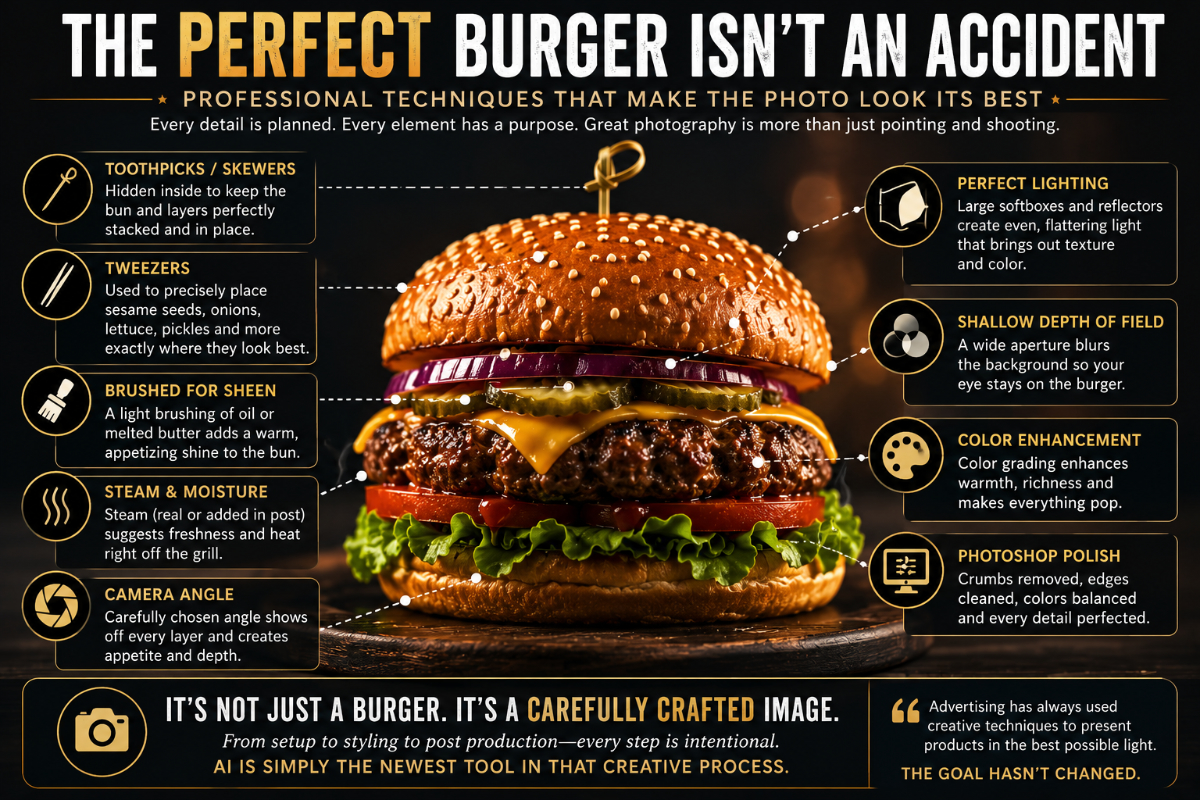
A Lesson From Commercial Photography
Years before SLInsiderGuide, I spent some time doing commercial food photography. Here’s something most people don’t know about food advertising.
Those beautiful hamburgers you see on television?
Most of them aren’t edible.
We used hairspray to make vegetables shine. Glue instead of milk because it photographed better. We’d move sesame seeds around one at a time with tweezers until everything looked just right. Sometimes we’d spend an hour preparing one sandwich before anyone even picked up a camera.
Nobody called it cheating.
It was advertising.
The goal was simple. Present the product in the best possible light.
Second Life creators have been doing exactly the same thing for years. Photoshop became an essential part of photography a long time ago. We adjusted colors, removed distractions, added effects, replaced skies, changed lighting, cleaned up backgrounds, and nobody questioned whether it was still art.
Now AI arrives, and suddenly the conversation changes.
The Reality of Second Life Photography Today
Take a walk through almost any major shopping event today. Uber. Anthem. Equal10. Weekend sales. It doesn’t really matter which one.
Look closely at the advertisements.
Some are clearly beautiful Black Dragon renders. Some are incredibly talented Photoshop work. Others almost certainly used AI somewhere during production. Sometimes it’s obvious. Sometimes you honestly can’t tell anymore.
And here’s something that doesn’t get talked about enough.
I’ve seen people accuse photographers of using AI when they simply knew how to use Black Dragon better than everyone else. Second Life has become so visually impressive that even experienced users sometimes mistake great photography for AI-generated artwork.
That alone should make us stop and think.
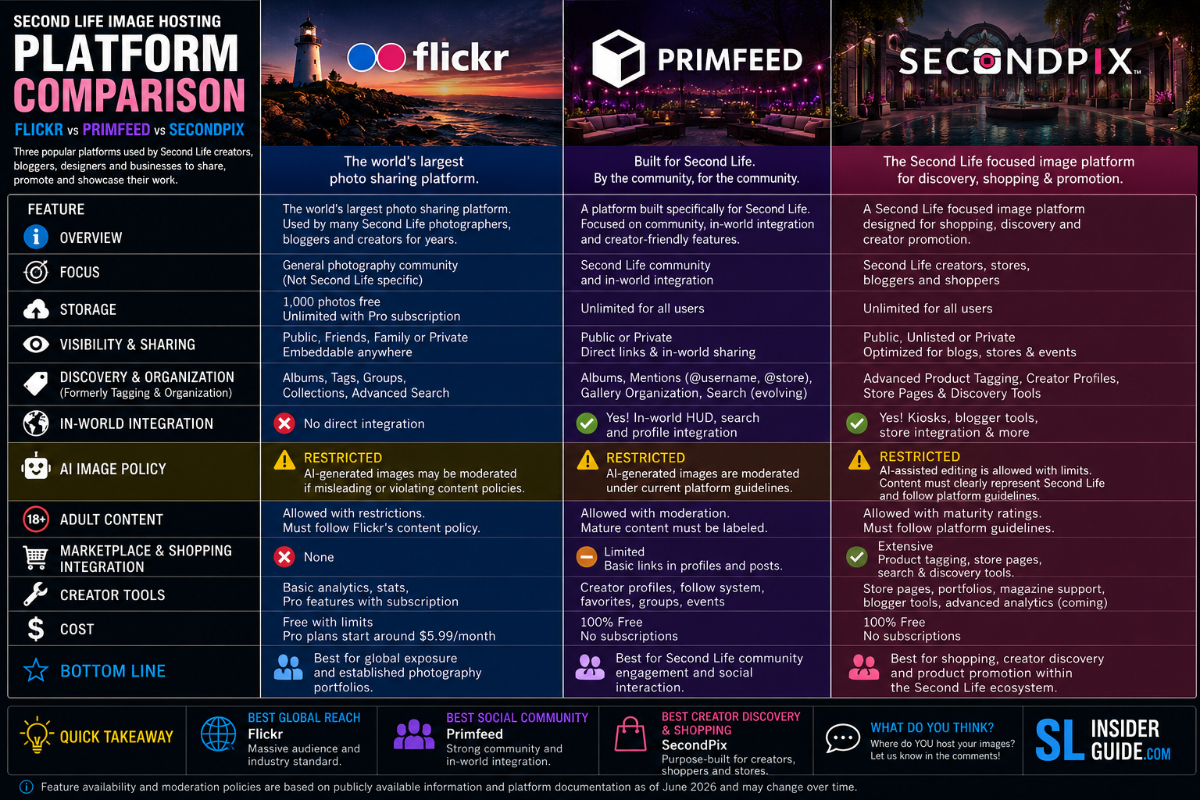
Three Platforms, Three Different Approaches
Flickr
Flickr has become more restrictive over the years, especially for many creators producing mature-themed content. Between moderation policies, account concerns, and premium limitations, quite a few Second Life residents have started looking elsewhere.
Primfeed
Primfeed arrived with a fresh approach built specifically for Second Life, and for a while it looked like exactly what many creators wanted. Lately, though, much of the conversation has shifted toward moderation policies and AI-generated content. To be fair, Primfeed has explained why those policies exist. Their goal is protecting authenticity and maintaining community trust. Whether people agree with those decisions is another discussion altogether, but it’s clear the topic has become one of the most talked-about issues surrounding the platform.
SecondPix
Then there’s SecondPix.
After spending time talking with Dema Fairport and exploring the site, I came away impressed with what she’s building. It’s obvious the focus isn’t on becoming another social media platform. It’s about helping shoppers find products, helping bloggers connect creators with buyers, and giving stores another avenue to showcase their work.
One thing I do respect is that her focus appears to be less about policing which software someone uses and more about whether the finished image still represents Second Life. If someone looks at it, they should recognize the world we’re all logging into every day. But again like Primfeed, the site is imposing restrictions and moderating AI content.
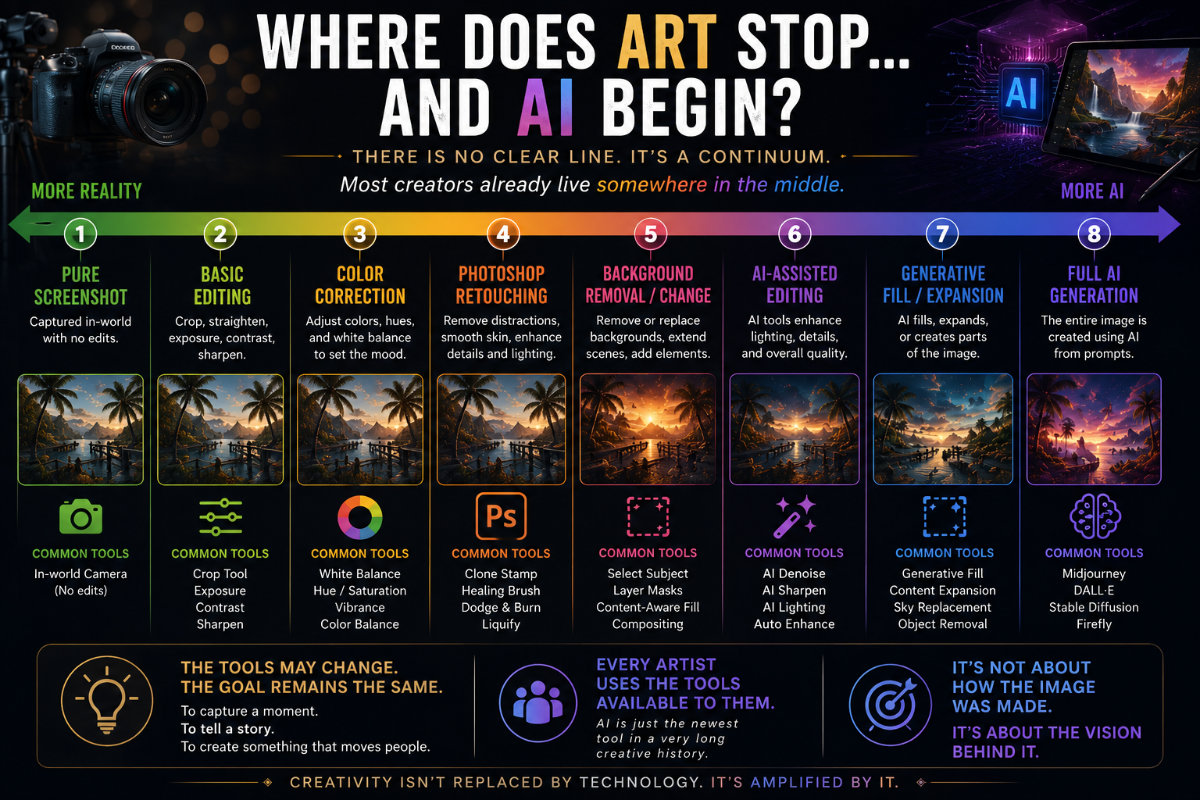
Where Do We Draw the Line?
I understand that philosophy
I also don’t envy anyone trying to moderate AI in 2026.
Where do you draw the line?
If Photoshop removes a distracting object, is that AI?
If AI improves lighting, is that different than spending twenty minutes adjusting curves by hand?
If it extends the edge of a photograph because the crop was too tight, has the artwork somehow become less authentic?
Those aren’t easy questions anymore.
And they’re only going to get harder.
AI Isn’t the Same as Misleading Advertising
Now, before someone jumps into the comments, let me be clear about something.
I’m not defending misleading advertising.
If someone uses AI to completely misrepresent a product, that’s a problem. Buyers deserve to know what they’re actually purchasing. That isn’t an AI issue—that’s an honesty issue.
But improving lighting?
Cleaning up backgrounds?
Adding atmosphere?
Creating a better composition?
Photographers have been doing those things for decades.
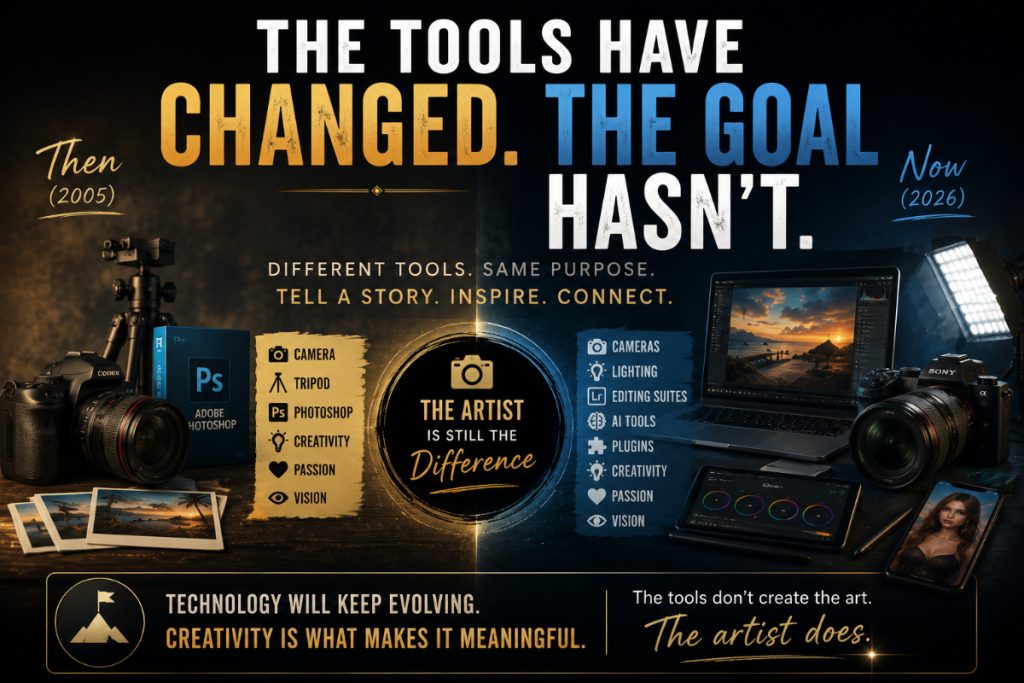
The tools have changed.
The goal hasn’t.
Maybe We’re Asking the Wrong Question
Maybe that’s why I keep coming back to the same question.
Are we spending so much time arguing about the software…
…that we’re forgetting to look at the finished artwork?
If an image inspires someone to visit a store, attend an event, discover a new creator, or simply appreciate the creativity behind it, does it really matter which combination of tools helped bring that vision to life?
Some people will say yes.
Others will say no.
Final Thoughts
And that’s okay.
Good conversations usually don’t end with everyone agreeing.
I don’t pretend to have all the answers, and maybe there aren’t any perfect answers to be found. What I do know is this: AI isn’t going anywhere. Just like digital photography didn’t replace creativity, AI isn’t going to replace it either. It will simply become another tool, another skill to learn, and another part of the creative process.
The real question isn’t whether AI should exist.
It’s how we choose to use it.
I’d really like to hear what you think. Where would you draw the line? Should image platforms focus on how an image was created, or should they focus on whether it honestly represents what it’s trying to show?
.
.